Multiscale Networked Systems
The Multiscale Networked Systems (MNS) group researches the emerging architectures that can support the operations of multiscale systems across the Future Internet.

The Multiscale Networked Systems (MNS) group researches the emerging architectures that can support the operations of multiscale systems across the Future Internet.
Please find vacancies of the MNS group here.




Anestis Dalgkitsis


Cyril Hsu

Nafis Tanveer Islam

Nafiseh Soveizi

Poojith Umesh Rao
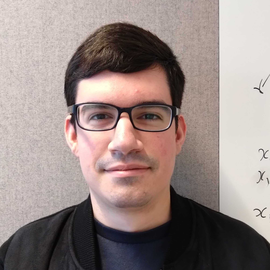
Angelos Dimoglis

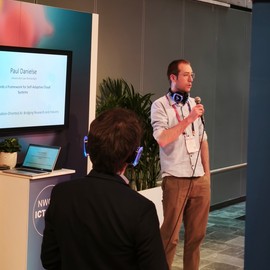
Paul Danielse

Stefanie Boss

Tommaso Pacciani

Zhiheng Yang

Ziyan Zhang
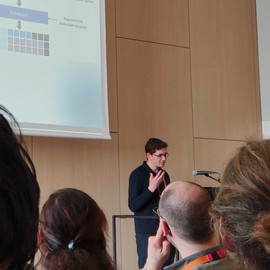
Asim Zoulkarni
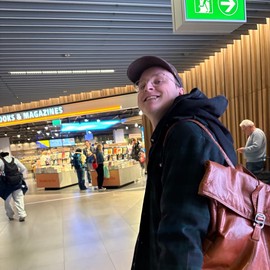
Dani Termaat

Gabriel Pelouze

Jose Zerna


Koen Greuell
Floris-Jan Willemsen
Henk Dreuning
Hongjie Xie
Imre Fodi
Jamila Kassem
Mani Mamindlapally
Misha Mesarcik
Na Li
Saba Amiri
Sara Shakeri
Shaozhen Shi
Siamak Farshidi
Tom Wassing
Yi Cheng
Yuandou Wang
Zijie Liu
Loading publications…
Software tools, infrastructures, and demonstrations are, just as scientific publications, considered to be important research output of the MNS group. Over the years, the researchers and PhD-students of the MNS group developed several research tools and infrastructures.
The knowledge base search engine is a tool that facilitates the discovery of research assets across communities. It allows for the indexing of heterogeneous assets (such as datasets, computational notebooks or API services), the enrichment of metadata using contextual information, and the retrieval of assets most relevant to a search query
NaaVRE is a platform that supports data-centric research activities. Through a set of Jupyter Lab extensions and dedicated services, it allows users to containerize notebook cells, compose workflows based on these cells and run workflows on the cloud.
A research facility for experimentation with programmable networks, distributed systems, cloud infrastructure, embedded systems, and machine learning.
Current and past projects that the MNS group has contributed to over the years.
ARTICONF (smART socIal media eCOsytstem in a blockchaiN Federated environment) ARTICONF provides personalized recommendations to social media users and enables them to collectively recommend and generate content, flag misinformation and earn rewards in return while ensuring no ownership violation.

Blue-Cloud 2026 is a collaborative project that leverages Europe’s expertise in aquatic environmental observation and data handling. Building on existing infrastructures like Copernicus and EMODnet, Blue-Cloud aims to create a federated ecosystem for FAIR and open data in marine research.
Blue-Cloud delivered a collaborative virtual environment to enhance FAIR and Open Science. Between October 2019 and March 2023, Blue-Cloud deployed a cyber platform with smart federation of an unprecedented wealth of multidisciplinary data repositories, analytical tools, and computing facilities to explore and demonstrate the potential of cloud-based Open Science and address ocean sustainability, UN Ocean Decade, and G7 Future of the Oceans objectives.
CATRIN (Controllable, Accountable, Transparent, and Reliable Internet) is a national project funded by NWO. It is aiming to propose and prototype a novel security-by-design concept and extension to the Internet that enhances digital sovereignty; that is the ability for end users to have control over their own digital destiny - the data, hardware, and software that they rely upon.
CLARIFY (CLoud ARtificial Intelligence For pathologY) is an innovative, multinational, multi-sectorial, and multidisciplinary research and training programme that links two highly differentiated specialities: engineering and medicine, to produce 12 Early Stage Researchers (ESRs) in artificial intelligence (AI), cloud computing and clinical pathology with the focus on digital pathology.

Mobile communications systems have become essential infrastructures supporting digital demands from all industry sectors. The current 5G networks are programmable, flexible, and agile, capable of meeting differentiated service level agreement requirements for distinct services and tenants.
ENVRI-FAIR (ENVironmental Research Infrastructures building Fair services Accessible for society, Innovation and Research). The overarching goal of EU-funded ENVRI-FAIR is to advance the findability, accessibility, interoperability and reusability (FAIRness) of these digital assets and connect them to the emerging European Open Science Cloud.

Researchers face challenges in accessing and analysing the wealth of environmental data scattered across numerous sources. ENVRI-Hub NEXT bridges this gap, offering a user-friendly platform for seamless access to data from environmental Research Infrastructures, fostering interdisciplinary research and driving breakthroughs in environmental science.
ENVRIplus (Support Environmental research with integrated solutions) ENVRIplus is a Horizon 2020 project bringing together Environmental and Earth System Research Infrastructures, projects and networks together with technical specialist partners to create a more coherent, interdisciplinary and interoperable cluster of Environmental Research Infrastructures across Europe.

The EVERSE project aims to create a framework for research software and code excellence, collaboratively designed and championed by the research communities, in pursuit of building a European network of Research Software Quality and setting the foundations of a future Virtual Institute for Research Software Excellence.
The Future Network Services consortium consists of 60 companies, knowledge institutes and governments and focuses on developing the latest generation of mobile networks: 6G. The Netherlands has world-class expertise in network innovation, semiconductors and mobile applications essential for the development of this new network technology.
LifeWatch ERIC tackles the constraints affecting biodiversity and ecosystem research, such as the pressing need for increasingly diverse data, larger and more advanced models, open data and open science clouds, making it possible to explore new frontiers in ecological science and support society in addressing planetary challenges.
The LTER-LIFE research project is developing a virtual lab to link long-term data and models about plants, animals and the environment. We want to share methods for data analysis, modeling and simulation.
OSCARS brings together world-class European Research Infrastructures (RIs) in the ESFRI roadmap and beyond to foster the uptake of Open Science in Europe. The thematically oriented RIs are part of the five Science Clusters (Humanities and Social Sciences, Life Sciences, Environmental Sciences, Photon and Neutron Science, Astronomy, Nuclear and Particle Physics), which have strived to enable Open Science by providing FAIR data management policies and practices, and by contributing to a model of federation for thematic services that support both disciplinary communities, multidisciplinary initiatives and the wider public with harmonised models for access to data, tools, workflows and training.

Quantum Delta NL (QDNL) is a national program aimed at seizing opportunities in quantum technology, with well-defined goals, aspirations, and strategies. Our group is part of the QDNL project, exploring the hardware and software aspects of quantum networks, driving a robust approach toward developing nationwide quantum networks.
SWITCH (Software Workbench for Interactive, Time Critical and Highly self-adaptive Cloud applications). The SWITCH project addresses the urgent industrial need for developing and executing time critical applications in Clouds.Time critical applications such as disaster early warning, collaborative communication and live event broadcasting can only realise their expected business value when they meet critical requirements for performance and user experience.

VRE4EIC (A Europe-wide Interoperable Virtual Research Environment to Empower Multidisciplinary Research Communities) The VRE4EIC project addresses key data and software challenges in supporting multidisciplinary data driven sciences. link: https://vre4eic.ercim.eu/